
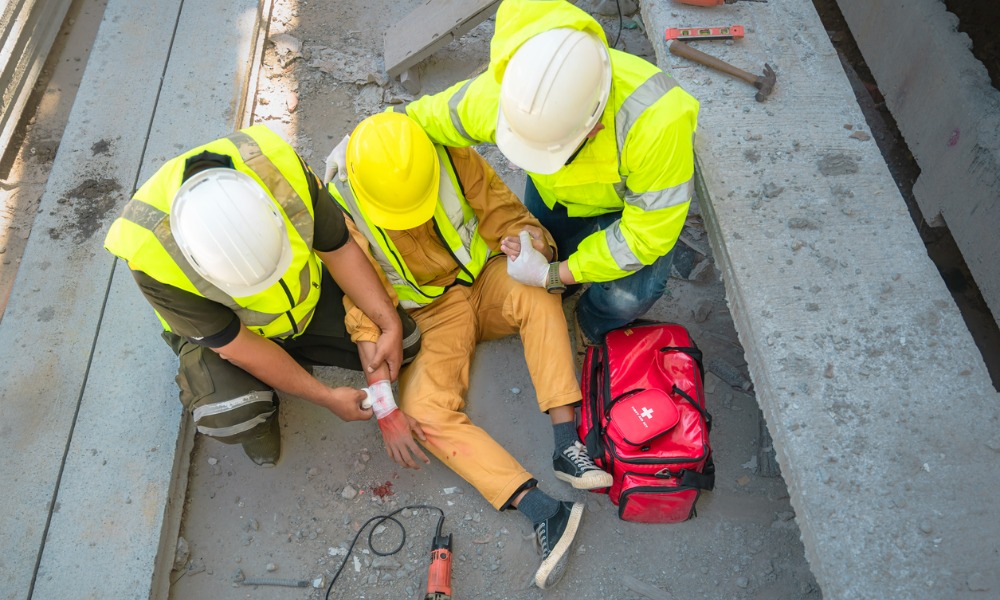

2.5 million. That’s how many nonfatal workplace injuries and illnesses U.S. private employers reported in a single year. Despite decades of OSHA standards, safety training, and hard hats, people still get hurt at work every single day. The question facing employers now isn’t whether injuries happen. It’s whether the tools available today can actually bend that curve.
They can. But not in the ways most companies expect, and not without some honest trade-offs. This piece breaks down what’s working, what’s still unproven, and how businesses can build a smarter approach to on-the-job safety before an injury report lands on their desk.
The Scale of the Problem Hasn’t Gone Away
Private industry employers reported 2.5 million nonfatal workplace injuries and illnesses in 2024, down 3.1 percent from 2023 according to the U.S. Bureau of Labor Statistics. That figure represents the lowest number of employer-reported injuries and illnesses since 2003 for this data series. Progress, yes. But 2.5 million is still a number that should make any operations manager uncomfortable.
On the fatal end, a total of 5,070 workers died from on-the-job injuries in the United States in 2024, a 4.0 percent drop from the 5,283 recorded in 2023. Falls, slips, and trips were the second-highest cause of fatal workplace events at 844 deaths. Those numbers represent real people, real families, and real businesses suddenly navigating legal and financial exposure they weren’t prepared for.
The downward trend is encouraging. But it masks wide variation by industry. Construction, warehousing, and manufacturing still carry injury rates that would be unacceptable in most office environments. And the cost to businesses extends well beyond medical bills.
Wearables and Sensors Are Entering Worksites Fast
The most interesting shift in occupational safety over the last five years isn’t a regulation. It’s hardware. Ergonomic sensors, exoskeletons, proximity alarms, and biometric monitors are now appearing in factories, distribution centers, and construction sites in real numbers.
Musculoskeletal injuries alone cost employers at least $17.7 billion in 2021, with workers in manufacturing and warehousing experiencing these injuries at higher rates than other sectors, according to a 2024 technology assessment from the U.S. Government Accountability Office on wearable technologies in industrial workplaces. That dollar figure is part of why companies are investing in prevention technology with real urgency now rather than treating it as a future budget line.
These wearable technologies vary widely in size and function. Exoskeletons, for example, can provide physical support to the user’s body during repetitive overhead work and are already deployed in industrial workplaces. Smart helmets detect vibration and impact. Ergonomic sensors clip to belt loops and buzz when a worker bends in a posture likely to cause a back injury over time.
The early results are genuinely interesting. Recent studies have drawn limited conclusions in assessing the net effect of wearables on employee health and productivity overall, though one peer-reviewed study showed that ergonomic sensors may reduce time spent in risky postures. The GAO report is honest about the limitations, and that honesty is actually useful for any employer trying to make a real purchasing decision rather than a performative one.
The 3-Layer Safety Stack: A Framework for Prioritizing What Actually Works
Most companies treat safety technology as a single category. They ask: “Should we buy wearables?” That’s the wrong question. A more useful way to think about it is in three layers, each addressing a different point in the injury timeline.
Layer 1: Prevention. Technologies that stop risky behavior before it causes harm. Ergonomic sensors, exoskeletons, and posture-monitoring vests live here. Their job is to interrupt the motion before the injury clock starts.
Layer 2: Detection. Technologies that catch a dangerous condition the moment it appears. Air quality monitors, proximity alarms near heavy machinery, and biometric monitors that flag fatigue or abnormal heart rate all belong in this layer. These tools don’t prevent the hazard; they catch it before it becomes an incident.
Layer 3: Response. Technologies that activate when an injury or near-miss has already occurred. GPS location sharing, real-time incident reporting apps, and connected safety vests that alert supervisors automatically fall here. The goal is cutting minutes off the response time, because in a serious injury, minutes matter.
Most companies only invest in one layer. A distribution center buys proximity sensors (Layer 2) but has no structured process for recording near-misses (also Layer 2) or for getting injured workers immediate help (Layer 3). Building across all three layers is where meaningful injury reduction actually comes from.
Where Technology Still Can’t Replace Good Judgment
Here’s the part that rarely appears in vendor pitch decks: a review of wearable safety technology found that the pressure of being constantly monitored can actually lead to increased stress in some workers and, consequently, an increased probability of injury. Buy the wrong device for the wrong workforce, and you’re not reducing risk; you’re creating a different kind of it.
Consider a mid-sized warehouse with a mixed workforce of long-tenured employees and newer hires. A supervisor introduces ergonomic sensors across the floor. Veteran workers, proud of their physical capability and skeptical of being “graded” by a device, start ignoring the alerts after two weeks. New workers follow their lead. The technology is running. The behavior hasn’t changed. The injury rate stays flat.
Technology adoption in safety requires the same change management work as any other operational shift. The sensor doesn’t drive the outcome. The culture around the sensor does.
“Daily attention to workplace safety and health directly improves the safety and health outcomes for workers, reduces preventable work-related injuries and illnesses, and ensures more workers go home safe and healthy at the end of each work shift.” — Nicole Blissenbach, Commissioner, Minnesota Department of Labor and Industry
That’s why, even as technology advances, injuries still happen, and when they do, workers need to understand their rights. Someone dealing with a denied claim or a disputed injury timeline often turns to a workers compensation lawyer colorado to help navigate the process. Technology reduces the frequency of that scenario. It doesn’t eliminate it.
A Practical Checklist Before You Buy Safety Tech
Before your company spends a dollar on wearables or sensor infrastructure, run through these five questions:
1. Which layer are you actually missing? Map your last 12 months of incidents and near-misses to the 3-Layer Safety Stack. Buy for the gap, not for the marketing brochure.
2. Have you involved the workers who will wear it? Pilot programs that include frontline employee feedback before full rollout see dramatically better adoption rates.
3. What does your incident reporting process look like today? Technology that generates data is useless without a person and a process to act on it.
4. Is your vendor publishing independent study results or only their own case studies? The GAO found that many ergonomic sensor manufacturers rely on self-reported outcomes. Push for peer-reviewed evidence.
5. What is your plan when the technology misses something? A sensor that fails to flag a hazard creates liability and false confidence. Build in human checkpoints regardless of what the device reports.
That last one tends to get skipped in the excitement of a new purchase. Don’t skip it.
The Bigger Picture
Workplace safety technology is genuinely moving the needle. The trend lines from BLS prove it, even if the progress is uneven across industries. But the companies seeing real reductions aren’t the ones with the most expensive hardware. They’re the ones that treat technology as one part of a system, not the whole answer.
The goal was never a safer sensor. It was a safer shift. Build the stack with that outcome in mind, and the numbers tend to follow.